
Some households light up when someone wins the gold medal for the week. Other households go quiet the moment scores appear. Both reactions are normal. A bit of friendly competition can help—or it can start to feel heavy. The useful skill is knowing when to lean on it, and when to ease off.
This is a practical guide to friendly chore competition: what helps, what starts to sting, and how to keep medals and leaderboards on the fun side. No big claims. Just kitchen-table ideas busy families and shared flats already recognise.
Why a little rivalry can help
Kids (and plenty of adults) often pitch in more when progress is easy to see and shared. A paper star chart, a whiteboard tally, or a live Choreboard can answer questions that otherwise turn into arguments:
- Who has helped lately?
- What still needs doing?
- Is anyone carrying the whole load alone?
A little friendly competition can sit on top of that. A gold medal for the week, a climbing avatar, a light “can I catch up before Friday?” feeling—these can make ordinary jobs feel more like a team effort. For more on that scoreboard idea, see chore charts vs. a live scoreboard.
Competition helps most when:
- Everyone can see the same board.
- Winning is about effort, not perfection.
- Losing does not mean shame or a lecture.
- Adults keep the rivalry cheerful, not obsessed with scores.
- People still help even when nobody is “winning.”
Used that way, medals are a celebration—not a ranking of who is the “good” child.
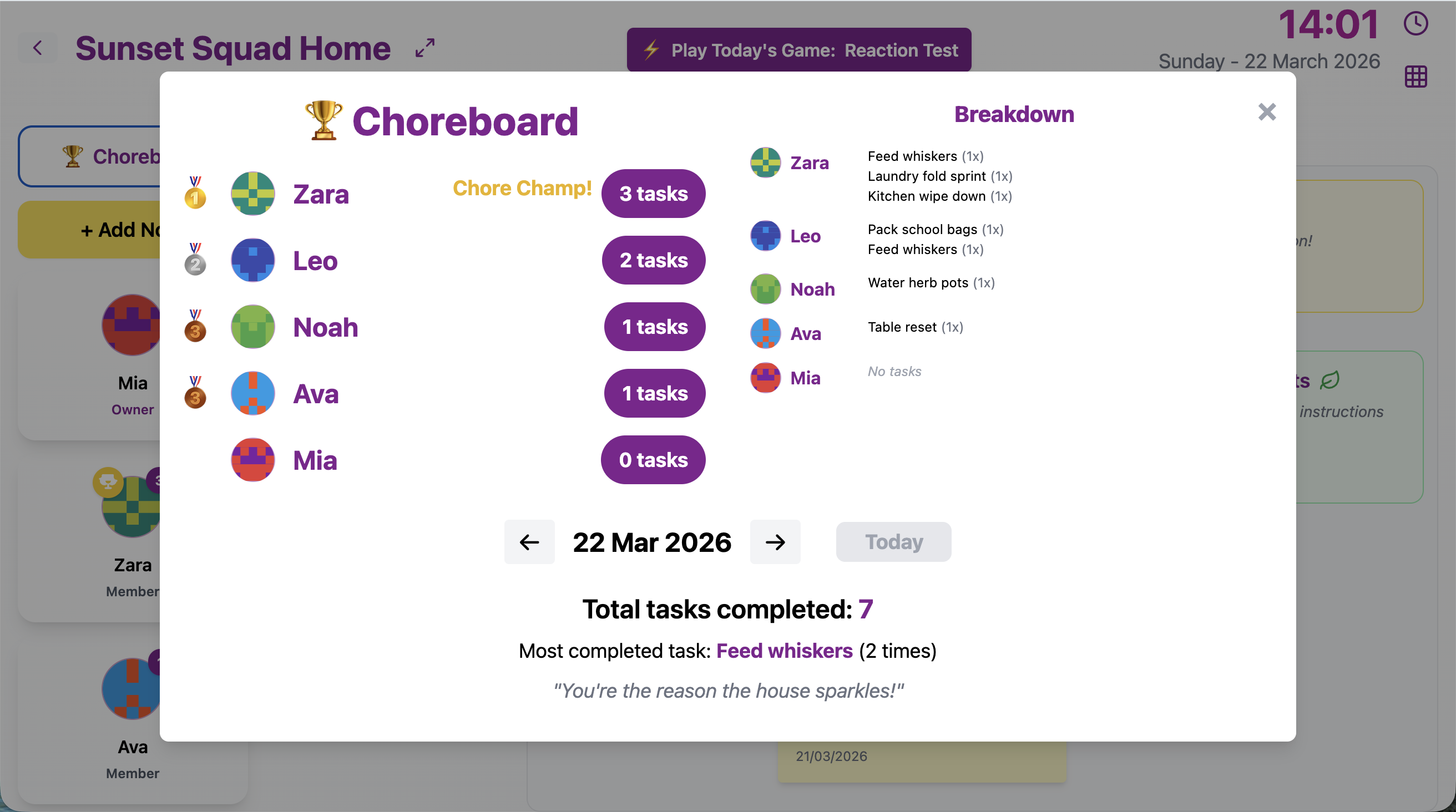
A live Choreboard makes weekly progress easy to see—keep it playful.
What “friendly” actually looks like at home
You can hear the difference in what people say.
Helpful:
- “Nice one—table’s clear.”
- “You’re only two chores behind; want a quick catch-up job?”
- “Gold medal this week goes to… and everyone still helped.”
- “Let’s beat yesterday’s mess, not each other.”
Less helpful:
- “You always lose.”
- “Why can’t you be more like your sibling?”
- “No screens until you catch their score.”
- “If you’d tried harder, you’d have the medal.”
Same board. Completely different mood.
If fairness fights are already loud in your house, start with a clear shared list and kinder language before you lean on rankings. How to make chores feel fair and making chores visible without nagging cover that ground without turning the kitchen into a sports league.
Choreboard medals vs game leaderboards
In homes that use Chorish, there are two playful boards people sometimes mix up:
| Board | What it shows | Best used for |
|---|---|---|
| Choreboard | Who has been completing chores, with a weekly gold-medal style highlight | Celebrating household help |
| Game leaderboard | Scores from the rotating daily mini-games | A light break and a shared laugh |
Keeping those separate helps. Chores are the work of living together. Games are an optional pause. A quick round of Quick Quiz or Memory Flip after a job can be a nice break—not a bribe that replaces the habit. More on that in why a quick game after a chore is a break, not a distraction.
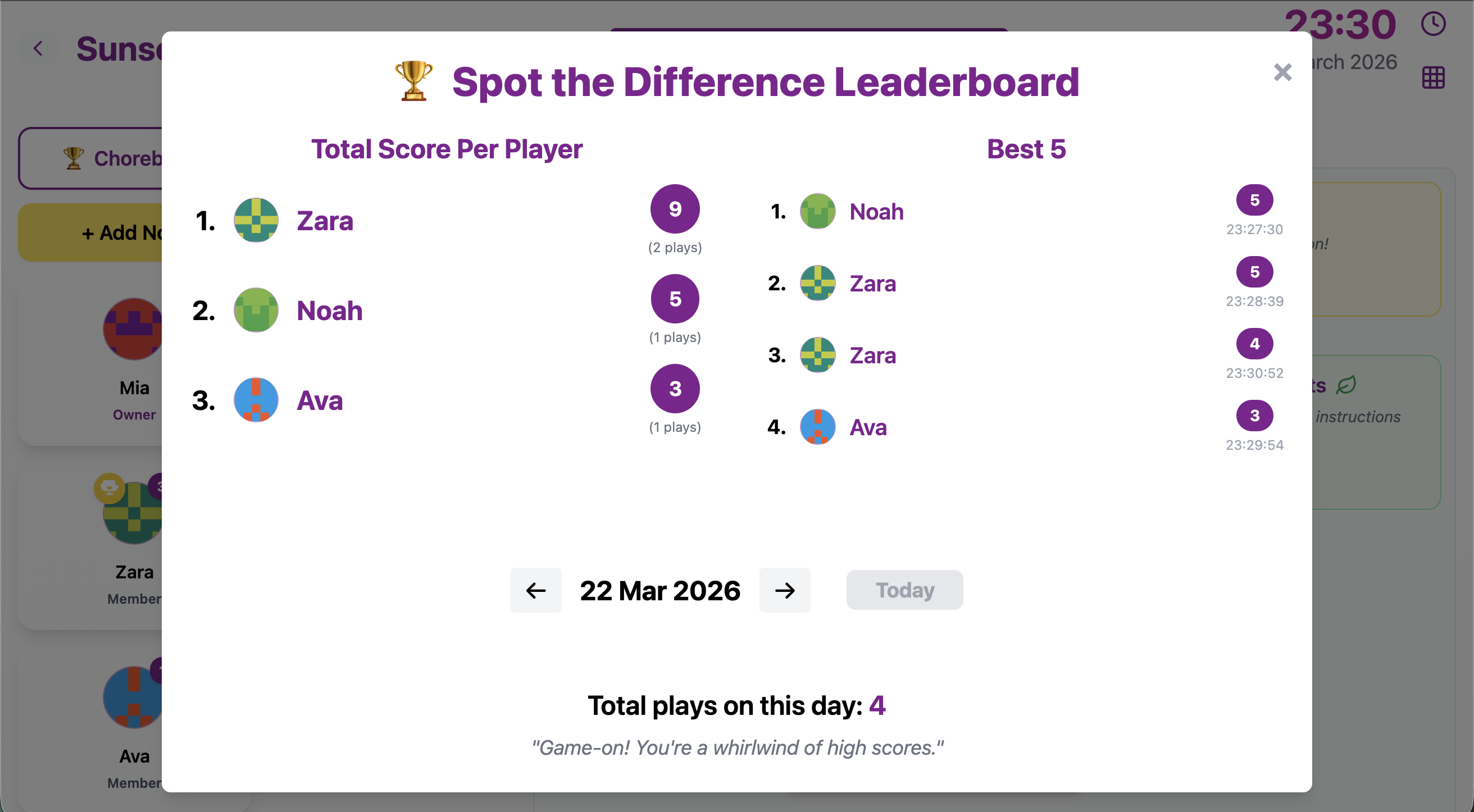
Game scores can stay playful on their own board—without mixing them into every chore.
You do not need Chorish for the idea. Any home can separate “who helped with the house” from “who won the silly quiz.” Mixing them into one big score often makes both feel heavier than they should.
When to dial competition back
Watch for early signs. They usually show up before a full meltdown:
- A child cries, freezes, or will not look at the board.
- Siblings start policing each other’s chores like tiny referees.
- Someone only helps when a medal is close, then disappears.
- Adults talk more about rankings than about the actual tidy room.
- A roommate jokes that the board “is getting weird,” and they mean it a little.
- Finishing a chore becomes a chance to put someone else down.
None of these mean your family is broken. They mean competition needs a lighter touch.
Ways to ease off that work in real kitchens:
- Pause rankings for a week. Keep the shared list; skip the medal chat.
- Celebrate the household, not the podium. “We cleared five jobs before dinner” beats “you came third.”
- Shrink the jobs. Tiny wins rebuild confidence—two-minute chores still count.
- Rotate special roles. “Tonight’s dishwasher captain” can feel better than a permanent ranking.
- Keep games optional. If the game leaderboard is the stress point, skip games for a bit and stay on the chore list.
- Match jobs to age. Younger kids may need simpler tasks and softer framing—see age-appropriate chore ideas.
If a child looks stressed, believe them and ease off. You can always bring the fun back later. You do not need a big diagnosis—just a kinder week.
How to keep medals feeling like a treat
A few household habits keep competition on the fun side.
Make the board shared, not secret
If only one adult tracks scores on their phone, competition can start to feel like being watched. A kitchen tablet, fridge chart, or open board keeps things ordinary—more like a family calendar than a private report card. The kitchen counter rule helps here: put the list where people already stand.
Praise the help, not only the trophy
Notice the moment someone finishes a chore. “Thanks for packing the bags” lands every day. Gold medals are a weekly bonus. If the bonus becomes the only thing that matters, ordinary days feel empty.
Allow imperfect weeks
Illness, visitors, exams, and “we all forgot” weeks happen. A kind restart beats a dramatic speech. How to restart chore habits and a gentle weekly family reset help you adjust the board without a lecture.
Keep rewards wider than winning
Extra story time, choosing the playlist, or a silly victory dance can celebrate effort even when someone did not take the medal. More ideas live in rewards that motivate kids if you want a longer list.
Show kids how to lose without making it weird
Adults set the mood. If someone else gets the medal, a quick “well done—you earned that” is enough. No long speech. No quiet sulk. No “fine, whatever.” Kids notice whether winning is the only thing that counts, or whether helping still matters when you come second.
A simple agreement you can say out loud
Try saying something like this:
- We use the board so everyone can see the work.
- Medals are a fun bonus, not a grade.
- Helping still counts on quiet weeks.
- If the board starts feeling mean, we turn the competition down.
- Games are optional breaks, not the only reason to help.
That short script gives kids and flatmates permission to enjoy the fun and ask for a softer mode. Asking for softer is easier when everyone already agreed it was allowed.
Where Chorish fits (gently)
Chorish is a free chore home in your browser with avatars, a shared list, sticky notes, a Choreboard, optional daily games with their own leaderboard, and no sign-up. Families who like a little friendly rivalry can enjoy the Choreboard’s weekly story. Families who need a calmer stretch can still use the same list without making every evening about who is “winning.”
Streaks, if you turn them on, are about showing up across days—not about ranking siblings against each other. More on that kinder framing in Streaks: show up every day. Certificates of recognition are another way to celebrate without turning the week into a fight—see certificates if that fits your home.
None of those extras require a permanent tournament. They are optional pieces of a shared kitchen tool.
Takeaways
- Friendly competition works when the list is shared and praise stays kind.
- Medals celebrate help; they should not become a personality ranking.
- Keep chore progress and game scores separate.
- Watch for stress, then dial rankings back without guilt.
- Teamwork language can sit beside a gold medal—you can have both.
If you want to try a free shared board with a Choreboard and optional games, open Chorish on a device that lives where the household already gathers. Curious about privacy, resets, or how homes work? The FAQ has plain answers.
Keep medals when they feel like play. Ease off when they start to feel like pressure. The chores still need doing either way—and everyone deserves a kitchen that can laugh about the bins.