
Evenings can be a strange mix of tired people, unfinished jobs, and cups that appear in places cups have no business being.
The day is nearly done. Everyone wants to rest. Someone still needs to find school shoes. The kitchen is not quite reset. There may be a lunchbox in a bag, quietly becoming tomorrow’s problem.
An evening reset is a simple way to stop the day from spilling messily into the next one.
It does not need to be long. It does not need to be perfect. It definitely does not need to turn into a dramatic family cleaning session with one person narrating the state of the house like a documentary.
The goal is smaller and much more useful: spend 10 to 15 minutes clearing the obvious jobs, putting tomorrow within reach, and helping the household end the day with a little less friction.
Here is how to build an evening reset routine that works for real families, including the tired ones.
What is an evening reset?
An evening reset is a short routine at the end of the day where the household tidies the most important shared spaces and prepares a few things for tomorrow.
It is not a deep clean.
It is not a punishment.
It is not the moment when everyone must suddenly become deeply passionate about skirting boards.
An evening reset is more like pressing “save” on the day.
It might include:
- Clearing the kitchen table.
- Moving cups and plates to the sink or dishwasher.
- Putting shoes and bags by the door.
- Resetting the sofa.
- Moving laundry to baskets.
- Checking tomorrow’s school or work items.
- Choosing one small bedroom job.
The power is in the repeat. A small reset most evenings can do more for household calm than one heroic tidy-up that leaves everyone grumpy.
If your family already uses small jobs during the day, this routine builds on the same idea as why a two-minute chore still counts: tiny tasks are still real progress.
Keep the reset short enough to repeat
The evening reset should be short.
Ten minutes is a good starting point. Fifteen minutes is plenty for many families. If the reset regularly becomes an hour-long clean, people will start avoiding it. Fair enough, really.
Try setting a clear boundary:
- “Ten-minute reset, then we stop.”
- “One shared space and one personal job.”
- “Kitchen, bags, sofa, done.”
- “Pick two jobs from the board.”
The stop point matters. Children are more likely to join in when they trust that the reset will not keep expanding. Adults are too.
Think of the reset as maintenance, not transformation. You are not trying to create a perfect home before bed. You are trying to make tomorrow morning less annoying.
Our guide to morning routines that actually work pairs well with this: evenings are often where smoother mornings begin.
Pick the right reset time
The best time for an evening reset depends on your household.
Some families do it straight after dinner. Others do it before screen time, before baths, before bedtime stories, or just before adults finally sit down and discover someone has left a toy under the cushion.
Good reset moments include:
| Reset time | Why it can work |
|---|---|
| After dinner | Kitchen mess is already visible and easy to tackle |
| Before screens | One helpful action before relaxing |
| Before bath or bedtime | Creates a predictable wind-down rhythm |
| Before packed lunches | Helps tomorrow’s things land in one place |
| After younger kids sleep | Works better for older children and adults |
The timing should feel natural. If everyone is melting down at 7:45pm, do not start there. Move the reset earlier, shrink it, or choose one tiny job.
The best routine is the one your family can actually repeat.
Make the reset visible
Evening chores often fail because nobody knows what still needs doing.
One person sees the kitchen. Another sees the hallway. Someone else sees nothing because they are facing a screen, book, blanket, or snack.
A visible list helps everyone work from the same picture.
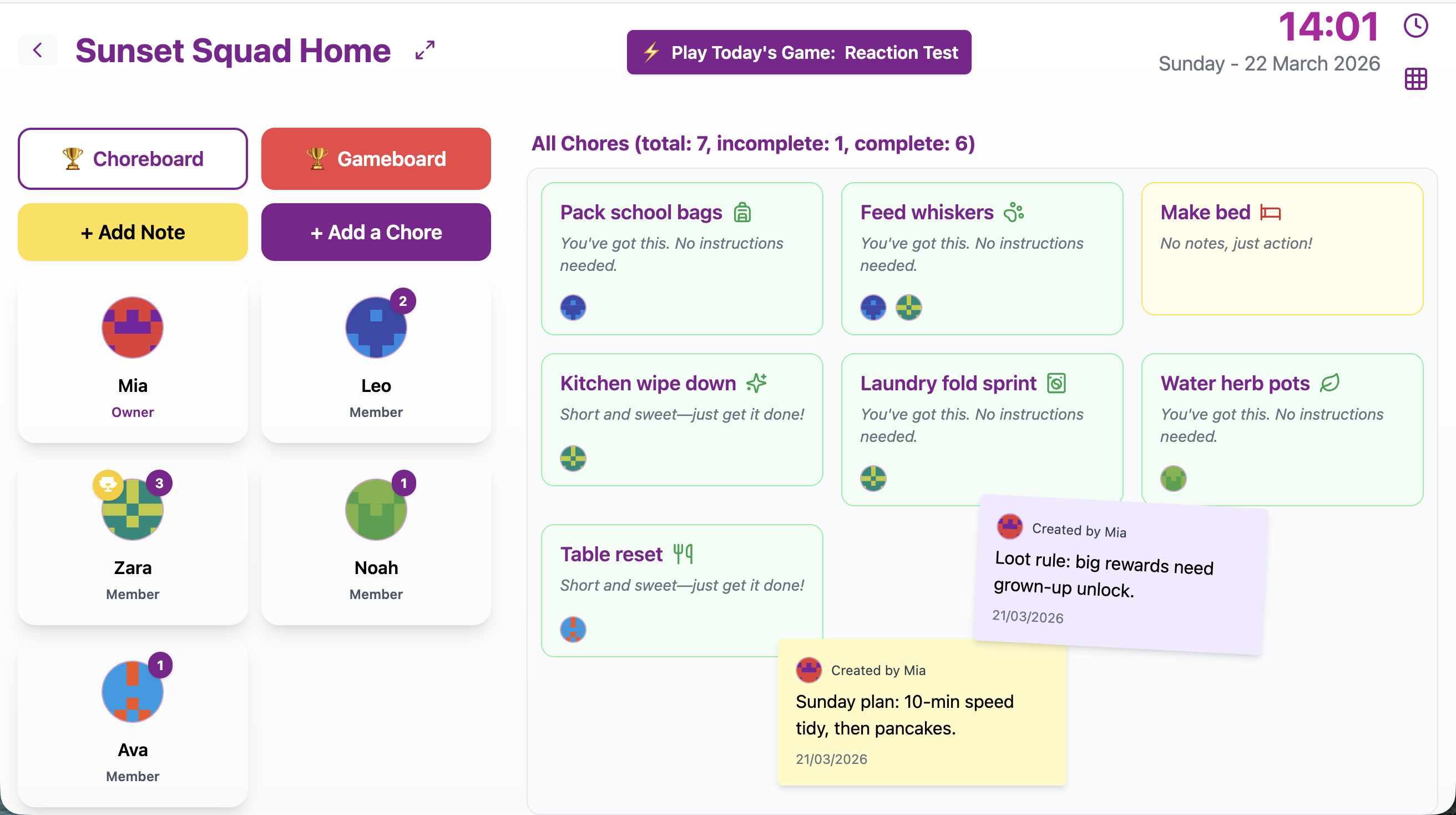
A visible list makes the evening reset easier to follow without one person calling out every job.
The list can be very simple:
- Clear table.
- Dishes to sink.
- Bags by door.
- Shoes away.
- Sofa reset.
- Clothes in basket.
You can keep this on a whiteboard, paper chart, sticky notes, or a shared digital board. The format matters less than visibility.
When the list is visible, the parent prompt can become shorter:
- “Pick one reset job.”
- “Check the board.”
- “Choose kitchen or hallway.”
- “Mark one done before we stop.”
That is much calmer than trying to remember everything out loud at the end of a long day.
For more on this approach, see making chores visible without nagging.
Choose reset jobs that have a clear finish
Evening chores should be specific.
“Tidy downstairs” is too big. It sounds like the start of a weekend project, not a bedtime routine.
Clear jobs are easier:
| Vague job | Better evening reset job |
|---|---|
| Tidy the kitchen | Put plates in dishwasher and wipe table |
| Sort the hallway | Put shoes by the door and bags on hooks |
| Clean your room | Clothes in basket and books by bed |
| Help downstairs | Reset sofa cushions and move cups to kitchen |
| Get ready for tomorrow | Bag packed, water bottle ready, shoes found |
The more visible the finish line, the less arguing you get about whether the job is done.
Small chores also make it easier for children to help when they are tired. A child may not manage a full room tidy at bedtime, but they can put clothes in the basket or carry cups to the kitchen.
Give everyone a role
Evening resets work best when everyone has a clear role.
That does not mean everyone does the same amount. A preschooler, a tween, a teenager, and an adult will not contribute in identical ways. That is fine.
Try matching jobs to age and energy:
| Person | Evening reset role ideas |
|---|---|
| Preschooler | Put toys in one basket, place pyjamas by bed, carry spoon to sink |
| Ages 5-7 | Put shoes away, move cup to kitchen, choose tomorrow’s book |
| Ages 8-10 | Clear table spot, pack reading folder, reset sofa |
| Tweens | Load dishwasher section, prepare school bag, fold small laundry pile |
| Teens | Own tomorrow prep, reset shared space, help with pets or bins |
| Adults | Handle harder jobs, guide the list, keep the tone calm |
If fairness is a regular argument in your home, our guide to making chores feel fair explains why fair does not always mean everyone doing identical jobs.
The short version: everyone should contribute, but the job should fit the person and the day.
Try a three-zone reset
A simple way to organise the evening reset is by zones.
Choose three areas:
- Kitchen.
- Shared space.
- Tomorrow station.
The kitchen zone might include dishes, table, crumbs, or lunchbox checks.
The shared space might include sofa cushions, toys, cups, books, blankets, or shoes.
The tomorrow station might include bags, water bottles, homework, keys, coats, or anything that needs to leave the house in the morning.
This structure keeps the reset focused. Instead of walking around noticing every possible problem, you return to the same three zones each evening.
You can even rotate who owns each zone:
| Zone | Example owner |
|---|---|
| Kitchen | Adult + younger child |
| Shared space | Older child |
| Tomorrow station | Each person checks their own items |
The reset becomes easier when everyone knows where to look.
Use a timer if it helps
A timer can make the reset feel less endless.
Try setting one for 10 minutes and saying:
- “We reset until the timer ends.”
- “Pick the most useful jobs first.”
- “When it stops, we stop.”
This can work especially well for children who need a clear boundary. It also helps adults avoid adding “just one more thing” until the reset becomes a full cleaning session.
Keep the timer friendly. The goal is not panic-tidying. The goal is a short shared burst of effort.
If your household likes a little energy, play one song and reset until it ends. Choose carefully unless you want the evening routine permanently associated with a theme tune nobody can escape.
Pair the reset with a calming moment
An evening reset should lead somewhere pleasant.
That might be:
- Story time.
- A show.
- A quick game.
- A bath.
- A snack.
- Quiet reading.
- A few minutes together in the kitchen.
This helps the reset feel like part of winding down, not a sudden chore ambush.
You can say:
- “Reset first, then story.”
- “Ten-minute tidy, then we choose a show.”
- “Kitchen clear, then snack.”
- “Bags ready, then reading time.”
The order matters. The reset becomes the bridge between the active day and the quieter evening.
If games are part of your household rhythm, our article on why a quick game after a chore is a break, not a distraction has more on keeping playful rewards light and balanced.
Mark what is done
Marking chores done is not only for big jobs.
Small evening jobs count too. In fact, they may be the jobs that make tomorrow feel easier.
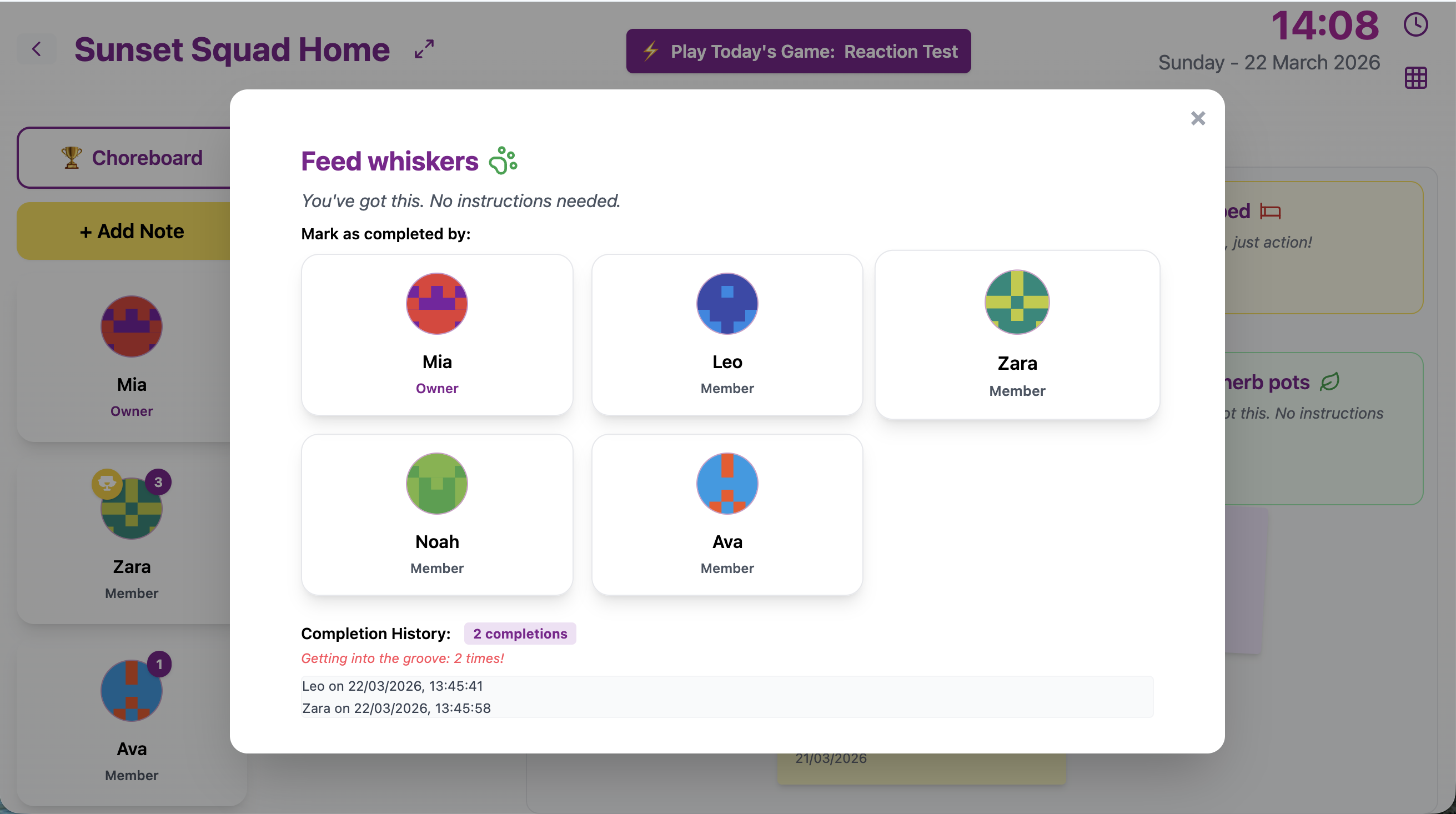
A quick completion step helps small evening jobs feel finished.
A completion step gives the routine a clear end:
- Pick a reset job.
- Do the job.
- Mark it done.
- Move into the calmer part of the evening.
This can be a tick on paper, a magnet moved across a board, or a tap on a shared digital chore list like Chorish. Keep it quick. Nobody wants admin homework at bedtime.
Prepare tomorrow without overdoing it
One of the best uses of an evening reset is making tomorrow easier.
Focus on the things that usually cause morning stress:
- Shoes.
- Bags.
- Lunchboxes.
- Water bottles.
- Homework folders.
- PE kits.
- Keys.
- Coats.
Try a “tomorrow check” near the end of the reset:
- “What needs to leave the house tomorrow?”
- “Is anything still in the wrong room?”
- “What always gets forgotten?”
- “Can we put it by the door now?”
This does not need to become a military operation. You are simply moving a few decisions out of the morning, when time is shorter and everyone is more likely to be looking for a shoe that is somehow under the sofa.
Have a tired-night version
Some evenings are too much.
Everyone is tired. Dinner ran late. Someone is upset. The house is noisy. The routine you imagined at 10am now feels wildly optimistic.
This is where a tiny version helps.
Try a tired-night reset:
- Dishes to sink.
- Shoes by door.
- Clothes in basket.
- One bag check.
- Stop.
Or even:
- Everyone does one helpful thing.
That still counts.
The habit survives because you made it small enough for a hard day. A routine that can shrink is much more useful than a routine that only works when everyone is cheerful, rested, and mysteriously cooperative.
A simple first-week evening reset plan
Try this for one week:
- Choose a reset time that already fits your evening.
- Pick three zones: kitchen, shared space, tomorrow station.
- Write down five to seven small reset jobs.
- Give each person one clear role.
- Set a 10-minute timer.
- Mark jobs done quickly.
- End with something calm.
- Review what worked at the end of the week.
Here is an example:
| Zone | Reset job |
|---|---|
| Kitchen | Plates in dishwasher, table wiped |
| Shared space | Cups moved, sofa cushions reset |
| Tomorrow station | Bags by door, water bottles ready |
| Personal | Clothes in basket, book by bed |
At the end of the week, ask:
- Which job made mornings easier?
- Which job was too big?
- Did the timing work?
- Was the list visible enough?
- What should we remove or shrink?
Adjust the routine instead of abandoning it. Good routines usually need a bit of tuning.
End the day with less friction
An evening reset will not make your home perfect.
That is not the point.
The point is to end the day with fewer loose ends. A clearer kitchen. A calmer shared space. Bags a little closer to the door. Clothes somewhere better than the floor. Tomorrow feeling slightly less like it is waiting to jump out from behind the curtains.
Small evening chores help because they protect the next morning. A visible list helps because everyone can see what matters. A short routine helps because tired families can actually repeat it.
If you want a shared place to keep evening reset chores visible, Chorish is free, browser-based, and does not require a sign-up. A fridge chart or whiteboard can work too. Choose the system your household will see at the right moment, and keep the reset short enough that people are willing to come back to it tomorrow.